Note: this is a review of earlier editions, updated to reflect changes in components. I have not actually reviewed the new editions, but I understand that the pacing has been improved so it's not overwhelming for children.
Christian Light's first grade program for language arts actually consists of three separate courses. Children begin with Learning to Read, which consists of 90 lessons, taking a little over half the school year. The Language Arts 100 course is brought in beginning the second month and continues through the end of the school year. I Wonder slightly overlaps Learning to Read then continues through the end of the year. Clear instructions and charts are provided to show the coordination of resources, so it's not as complicated as it sounds.
These courses are part of Christian Light's Sunrise curriculum. All Sunrise courses have accompanying Teacher's Guidebooks that contain answer key inserts, so it is not necessary to purchase separate answer keys.
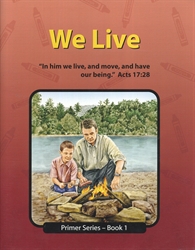
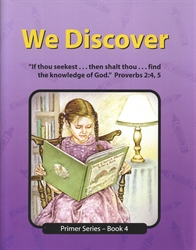
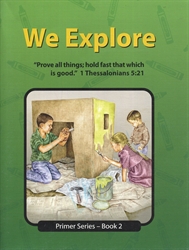
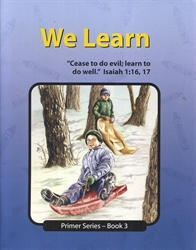
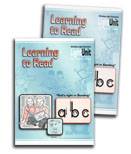
Learning to Read's primary components are ten LightUnits, a Teacher's Guidebook, Word Flash Cards, Phrase Flash Cards, Picture Flash Cards, and four small primers. Wall Picture Charts for (similar to the Picture Flash Cards) and Sound Slider (tool for helping students work with blending) are optional.
This course focuses on phonics, while also providing other introductory language arts instruction. Although it begins with letters and sounds, it moves very quickly into challenging concepts that would be overwhelming for some students, so be cautious about beginning it with "young" students. (See note at the beginning of the review.) The course recommends teaching sounds of the letters rather than letter names, but it still provides presentation for teaching both simultaneously.
Lessons are scripted for teacher presentation which is a tremendous help to the inexperienced mom who lacks confidence. However, the language is likely to seem a little stilted if you try to follow the script exactly.
The course does not presume that students have had prior phonics instruction. It introduces blending with consonant-vowel combinations (e.g., da, di, du....). Sight words are presented from the very beginning, so some words that are actually phonetic are taught early in the program as sight words (e.g., "ring," "is," "brown"). The program's stress on learning sounds carries throughout the course as students learn dictionary spellings and letter/sound representations such as the schwa and "ö". This approach is meant to standardize all similar spellings representing a single sound representation, but it is an unusual way to do it. In the process children learn to use correct terminology such as "macron" and "breve."
This course as well as the other two language courses stresses practice and repetition for mastery. The three sets of flash cards serve the same purpose. Supplemental ideas for activities to appeal to different types of learners are included.
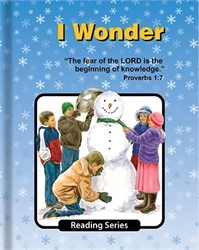
I Wonder is actually a continuation of Learning to Read, consisting of a hardcover reader, Teacher's Guidebook, and student workbook (which looks like LightUnits). It continues with phonics instruction, but it increasingly focuses on reading comprehension.
Language Arts 100 correlates with the other two courses, reinforcing phonics instruction and teaching penmanship, spelling, and introductory grammar (e.g., capitalization, punctuation). Ten LightUnits, a Teacher Guidebook, a set of practice sheets, and wall charts complete the Lanuage 100 course. These latter two courses (I Wonder and Language Arts 100) are not scripted like Learning to Read, but they do provide detailed lesson plans.
Reading, handwriting, spelling, and beginning grammar are integrated throughout the components of all three first grade language courses, rather than any one component focusing exclusively on one skill area. You really need to use all three together.
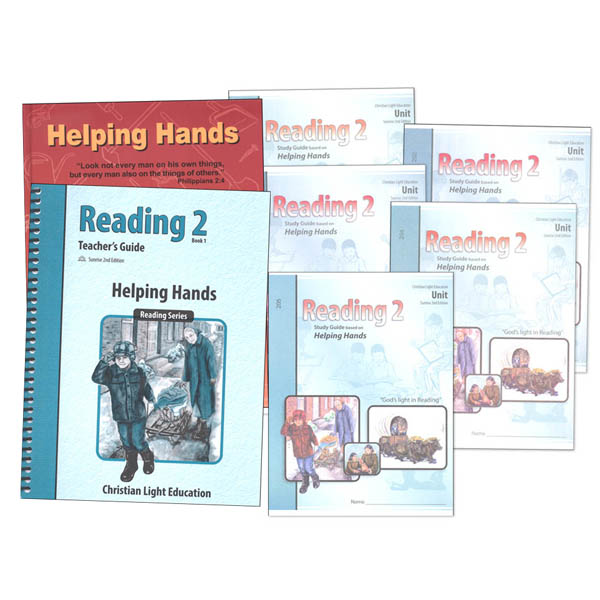
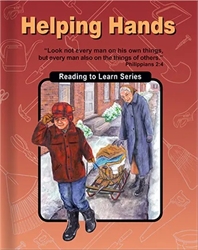
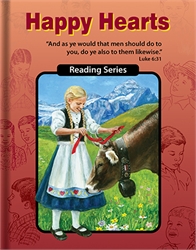
Christian Light's Reading 200 course continues reading instruction for second grade. It can be used on its own or alongside CLP's Language Arts 200. It consists of ten LightUnits and two hardcover readers titled Helping Hands and Happy Hearts. Each reader has its own teacher guide. The methodology is the same as for the first grade program, and it might be difficult to switch from another method of teaching phonics to this for second grade level. Components for this course include individual answer keys for each LightUnit.
This course continues to review and reinforce phonics, but it expands lessons to teach children to read for meaning and understanding. Students will be able to do much of the work on their own, but they should be required to do daily oral reading to ensure decoding skills as well as to develop reading fluency.
All these courses were designed for classroom presentation, but they require minimal effort to adapt for individual students. As with other Christian Light courses, things of God receive a great deal of attention. The warm and gentle stories and poems in the readers often start with a Scripture verse and teach lessons about thankfulness, honesty, unselfishness, and other godly attitudes and character traits. A few stories that take place in other lands and cultures are included. There are no fairy tales, but imagination is not excluded; in one delightful story a boy comes to his own house pretending to be a helpful stranger. Illustrations reflect Mennonite culture and values with modestly clothed figures, women and girls always in dresses, and rural subject matter. Simple one- or two-color illustrations enhance the text, making these readers a good choice for those who find full-color pictures in a reader too distracting. Readers are very low cost for such high-quality books.